
TL;DR
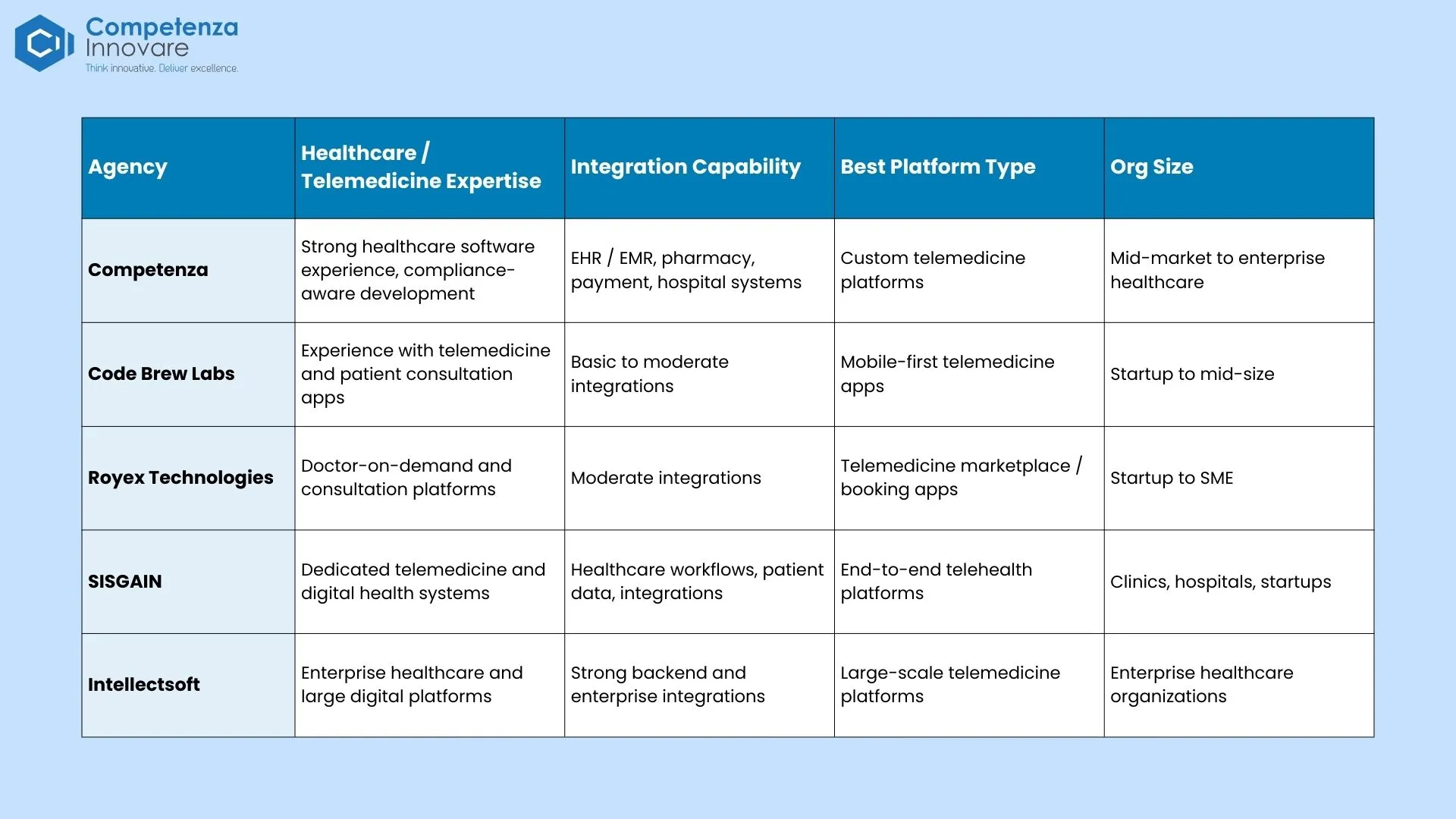
Already know what you are looking for? Here is the shortlist. The rest of the guide explains platform requirements, architecture considerations, compliance needs, and how to choose the right telemedicine development partner in the UAE.
Introduction
Most telemedicine projects in the UAE do not fail because of bad code. They fail because the development partner did not understand healthcare.
A video call feature is easy to build. A platform that handles encrypted patient records, integrates with an existing HIS or EHR, meets MOHAP and DHA licensing requirements, and scales reliably across hundreds of concurrent consultations is something else entirely.
That gap is what this guide addresses. We have shortlisted five development companies in the UAE based on their healthcare experience, integration capabilities, and ability to deliver telemedicine platforms that work in real clinical environments.
This is not a general app developer directory. Every company on this list has demonstrated capability in healthcare or telehealth software specifically.
We evaluated each vendor against:
- Demonstrated experience in healthcare or telemedicine software development
- Capability to build secure, scalable telehealth platforms
- Integration expertise with EHR/EMR, pharmacy, and payment systems
- Evidence of delivery maturity and engineering capability
- Vendor presence or delivery capability in the UAE or the GCC
- Public information from company websites, Clutch listings, and service portfolios
Essential Features of Telemedicine Software
Most hospitals in the UAE quickly realise something once they start planning a telemedicine model. A video call alone is not enough. Doctors still need patient records, prescriptions, appointment schedules, and sometimes monitoring data during the consultation.
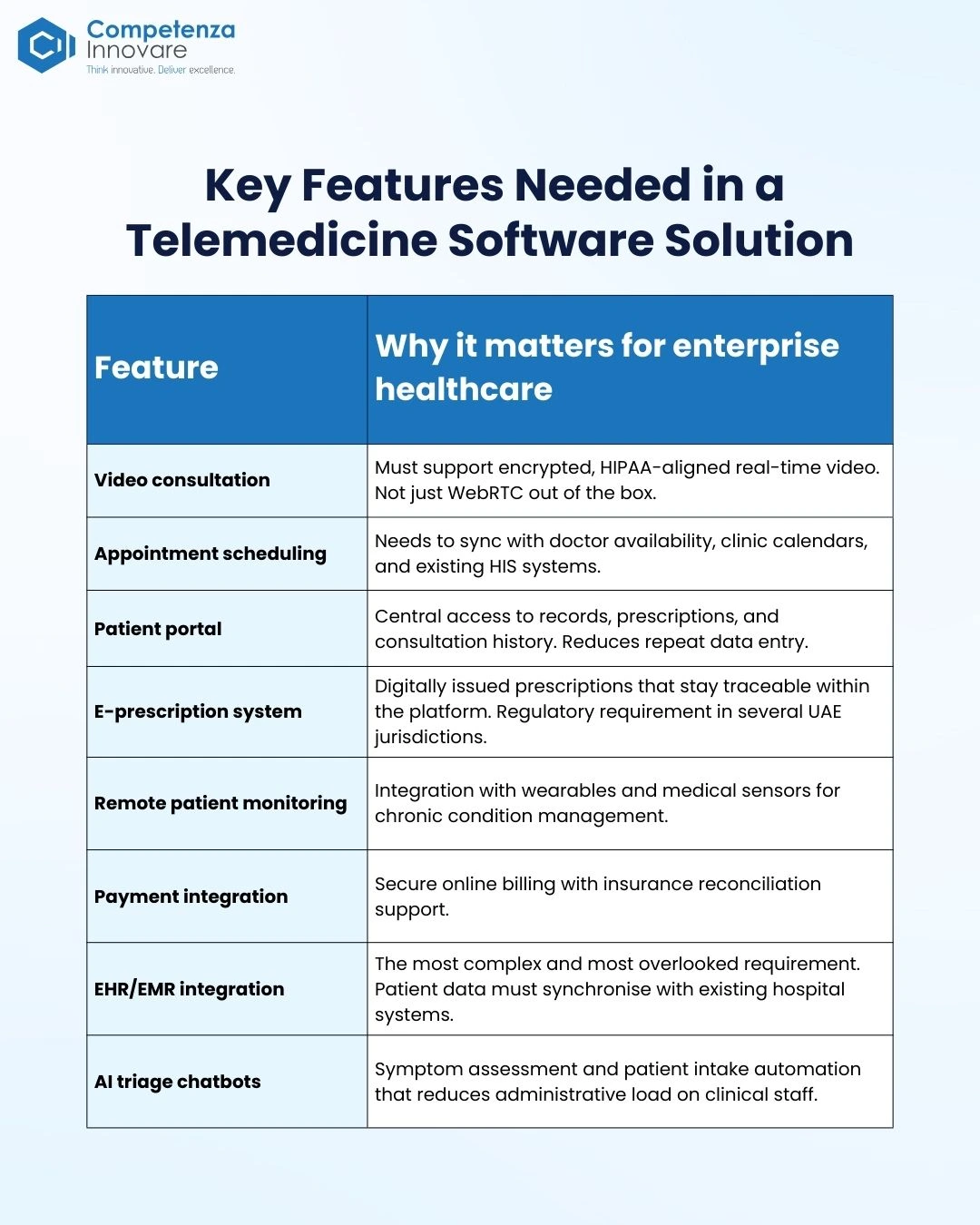
That is why telehealth platforms are built as connected systems rather than simple apps. The features below reflect the components healthcare teams typically expect when launching a telemedicine platform.
Common features include:
1. Video consultation
Secure video communication between patients and healthcare providers.
2. Appointment scheduling
Digital booking systems that manage doctor availability and patient appointments.
3. Patient portal
Allows patients to access medical records, prescriptions, and consultation history.
4. E-prescription system
Doctors can digitally issue prescriptions directly through the platform.
5. Remote patient monitoring
Integration with wearable devices and medical sensors.
6. Payment integration
Secure online payments for consultations and medical services.
7. bEHR/EMR integration
Ensures patient data is synchronized with hospital systems.
8. AI triage chatbots
AI-driven tools that assist with symptom assessment and patient intake.
While technology features matter, healthcare software cannot operate without regulatory approval. Telemedicine platforms in the UAE must comply with several rules related to licensing, patient data protection, and digital health services.
Telemedicine Regulations in the UAE
Healthcare technology platforms in the UAE must align with several regulatory frameworks governing digital healthcare and patient data protection.
UAE telemedicine platforms must align with regulations set by three key bodies:
- Ministry of Health and Prevention (MOHAP) governs telehealth licensing and digital health services at the federal level.
- Dubai Health Authority (DHA) regulates providers operating within Dubai, including licensing for practitioners offering teleconsultations.
- Health Authority of Abu Dhabi (HAAD) sets its own requirements for telemedicine services operating in Abu Dhabi.
Patient data protection is a separate consideration. Platforms must implement secure storage, encrypted transmission, and controlled access to patient records. Audit logs are not optional.
Healthcare software Development partners who have not built healthcare platforms in the UAE before will discover compliance requirements mid-project. That is expensive.
Read this guide to know more about what things you should consider before you start developing a telemedicine app in the UAE.
Top Telemedicine Software Development Companies in the UAE

1. Competenza

Competenza Innovare builds custom telemedicine and healthcare platforms for hospitals, digital health startups, and enterprise healthcare organisations across the UAE and GCC. The company focuses on architecture-led development rather than template-based builds, which is significant when the platform needs to integrate with existing hospital systems.
Most telemedicine projects that hit compliance or integration problems late in the build share the same root cause: the development partner designed the platform without healthcare workflows in mind. Competenza’s engineering approach starts with the clinical context, which reduces the risk of costly architectural rework after launch.
Healthcare teams building on Competenza’s architecture avoid the rebuild cycles that come from starting with a generic app framework that was not designed for clinical-grade data handling.
Why Competenza was shortlisted
We shortlisted Competenza for its experience building custom healthcare and telemedicine platforms, and its capability to integrate EHR systems, remote monitoring, and analytics.
Their Telemedicine capabilities include
- Video consultation platforms
- Appointment scheduling systems
- Patient portals
- E-prescription workflows
- EHR/EMR integrations
- Remote patient monitoring dashboards
Best for
Competenza is best for hospitals, digital health startups, and organizations building custom telemedicine ecosystems with multiple integrations, healthtech startups that build full telehealth products, and healthcare platforms targeting the UAE and GCC regulatory environments.
Not ideal for
Competenza may be less suitable for Teams looking for ready-made telehealth templates or low-cost MVP builds.

2. Code Brew Labs

Code Brew labs develops telemedicine apps with features such as video consultations, doctor discovery, appointment scheduling, and patient communication tools. The platform is designed for healthcare startups or service providers launching online consultation services.
Why we shortlisted Code Brew Labs
We selected Code Brew Labs for its experience with Health and digital health applications, and for a focus on rapid MVP development.
Best for
Code Brew labs is best for Healthcare startups launching basic telemedicine platforms, clinics offering remote consultation services through mobile apps, and companies building doctor–patient consultation marketplaces.
Not ideal for
Code Brew labs may be less suitable for healthcare organizations needing deep clinical workflow customizations and Telemedicine platforms deeply integrated with hospital EHR/EMR systems.
3. Royex Technologies

Royex Technologies is a Dubai-based mobile app development company that has built telemedicine-style platforms connecting patients with doctors through mobile applications. Their telemedicine work focuses on patient-facing platforms where consultations, appointment scheduling, and payments happen within a single application.
Why we shortlisted Royex Technology
We selected Royex technology because of its experience in developing doctor-on-demand telemedicine platforms, its capability to build mobile apps that connect patients with doctors for virtual consultations, and its implementation capability of booking systems for scheduling online medical appointments.
Best for
Royex technology is best suited for Startups launching telemedicine consultation apps, platforms connecting patients with independent doctors, and healthcare businesses building doctor-on-demand services.
Not ideal for
Royex Technology may be less suitable for Hospital systems requiring complex EHR or clinical system integration, and telemedicine platforms embedded deeply within hospital IT infrastructure.
4. Intellectsoft UAE

Intellectsoft is a global software development company that works with enterprises building complex digital platforms, including healthcare applications and telemedicine systems. Their healthcare software developmentwork often involves platforms where patients consult doctors remotely while hospitals manage appointments, clinical records, and digital services through connected systems.
Why we shortlisted Intellectsoft
We shortlisted Intellectsoft because of its experience developing healthcare apps that require system integrations and complex infrastructure, and understanding of platform architecture, backend services, and multi-system integrations.
Best for
Intellect software is best for Hospitals building enterprise telemedicine platforms connected to existing hospital systems, healthcare providers planning multi-service digital health platforms, and organizations requiring strong backend architecture and integration planning.
Not ideal for
Intellectsoft may be less suitable for early-stage startups seeking a lightweight telemedicine MVP. Projects focused only on basic video consultation apps and organizations working with very limited development budgets.
5. SISGAIN

Sisgain is a healthcare app development company that develops telemedicine platforms and digital health applications for hospitals, clinics, and healthtech startups. The company focuses heavily on telehealth systems that allow patients to consult doctors remotely while managing appointments, prescriptions, and medical data within a single platform.
Why we shortlisted Sisgain
We shortlisted Sisgain for its capability of development of secure video consultation systems for remote doctor–patient interaction, implementing appointment scheduling, patient onboarding, and consultation workflows, and Integration of e-prescriptions and patient record management within telehealth platforms.
Best for
Sisgain is best for Hospitals launching telemedicine services, clinics offering remote consultations for patients, and healthtech startups building telehealth platforms.
Not ideal for
Sisgain may be less suitable for companies looking for lightweight consultation apps or simple video-call features, and organizations that only need basic telemedicine functionality without broader healthcare workflows.
Choosing the right development partner is only one part of the decision. Healthcare organizations also need to understand how a telemedicine platform should be architected to handle consultations, patient data, and system integrations reliably.
Telemedicine Platform Architecture
Most teams assume telemedicine means video consultations. In practice, the platform sits on multiple technology layers that manage patient access, consultation workflows, healthcare integrations, and infrastructure. The architecture below shows how these layers typically connect in a real telemedicine system.

Knowing how telemedicine platforms are structured helps, but the real challenge lies in selecting a development partner capable of building and integrating these systems correctly.
The section below explains the factors that should be considered before choosing a telemedicine software development company.
How to Choose a Telemedicine Software Development Company in the UAE
Healthcare app development must handle patient data, integrate with hospital systems, and remain stable during large volumes of consultations. Not every development company understands these realities. The following factors help healthcare organizations evaluate whether a vendor can actually deliver a reliable telemedicine platform.
1. Healthcare compliance expertise
Telemedicine platforms must handle sensitive patient data securely. Development partners should understand healthcare privacy standards and regulatory requirements.
2. Experience in digital health
Healthcare software app development follows clinical workflows that typical apps rarely consider. Doctors document consultations, prescriptions must remain traceable, and patient histories need to stay accessible during appointments. Development teams with digital health experience already understand these requirements. Without that context, platforms often look functional but force clinicians to adjust their workflow around the software.
3. Integration capabilities
Ensure the vendor can integrate the telemedicine app with:
- EHR / EMR systems
- Insurance platforms
- Pharmacy networks
- Payment gateways
Weak integration planning often leads to manual data transfers and fragmented patient information.
4. Security and data privacy
Medical platforms must protect patient information at every stage of a consultation. Secure authentication, encrypted data transmission, and controlled user permissions are essential components. Audit logs also play an important role because healthcare organizations often need to track access to patient records.
5. Scalability
Telemedicine systems should support thousands of concurrent users, especially during peak consultation hours.
Common Mistakes When Choosing a Telemedicine Development Partner

Build Your Telemedicine Platform with Competenza
Competenza Innovare helps healthcare organizations build secure and scalable telemedicine platforms tailored to their clinical workflows and patient engagement needs.
The company focuses on:
- Custom telehealth platform development
- Secure healthcare architectures
- EHR and healthcare system integrations
- Cloud-native infrastructure for scalable telemedicine services
For healthcare providers and startups launching digital health platforms, a custom-built solution can enable long-term scalability and integration flexibility.
Book a Free Consultation to discuss your telemedicine platform requirements.
FAQs
What is telemedicine software?
Telemedicine software enables healthcare providers to deliver medical services remotely using digital communication technologies. These platforms typically include video consultations, appointment scheduling, patient records access, and prescription management.
How long does it take to build a telemedicine platform?
Development timelines depend on complexity. Basic telehealth apps may take 3–6 months, while enterprise telemedicine platforms with integrations and advanced features can take 6–12 months or longer.
What regulations apply to telehealth in the UAE?
Telehealth services in the UAE must comply with healthcare authority guidelines and data protection laws governing patient information. Organizations should ensure that telemedicine platforms meet relevant licensing and privacy requirements.
How much does telemedicine app development cost?
Telemedicine app development typically ranges from $20,000 to $150,000+, depending on the platform’s complexity, integrations, and infrastructure requirements.
What features should a telemedicine platform include?
Core features include:
- Video consultations
- Appointment scheduling
- Patient portals
- E-prescriptions
- Remote patient monitoring
- Secure payment integration
- EHR/EMR connectivity