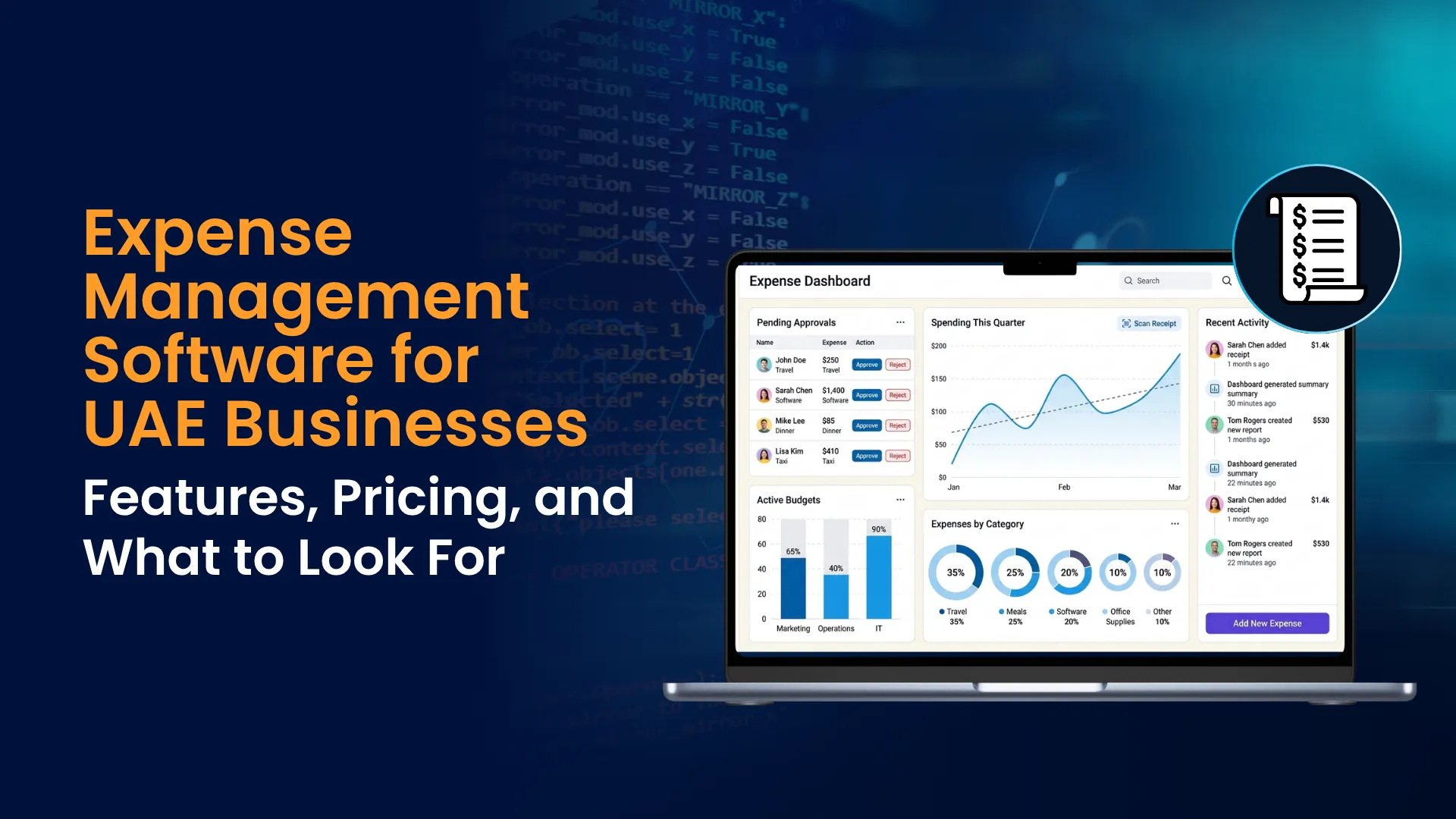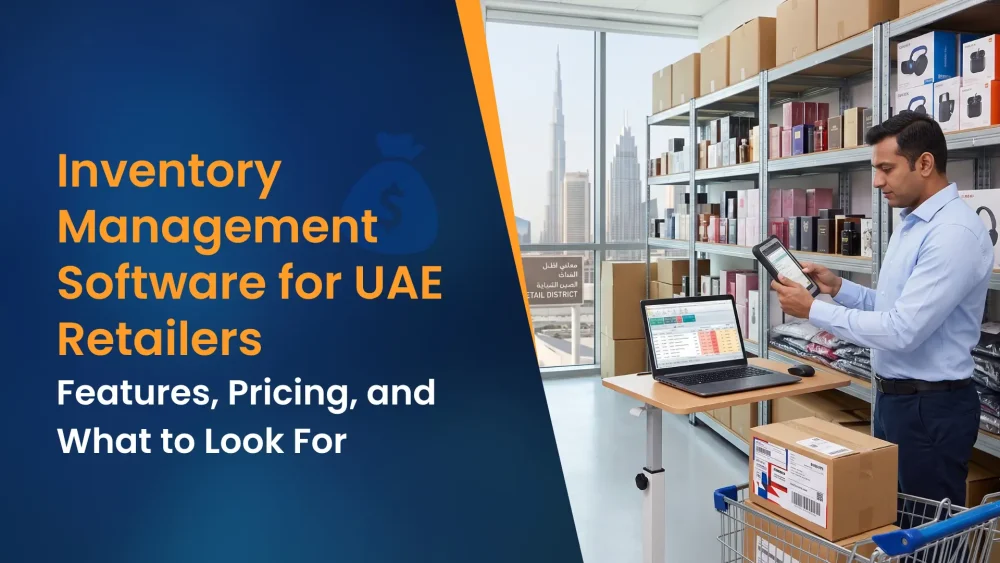
TL;DR
- Spreadsheets and manual stock counts break down for a UAE retailer once they run more than one store or sell on a marketplace like Noon or Amazon alongside their own storefront.
- The features that matter most are real-time stock sync across channels, barcode/RFID counting, VAT-ready reporting, and demand forecasting, not the dashboard’s look.
- Off-the-shelf platforms price from free starter tiers to roughly AED 100 to AED 900 a month per organisation, with most UAE SME retailers landing in the AED 350 to AED 900 range once they add multi-warehouse or multi-channel modules.
- Multi-store, multi-channel stock sync and marketplace-specific integrations are where off-the-shelf tools fall short, and where a growing retail chain eventually needs a platform built around its own store network.
- Competenza built exactly this category of platform for iHerb and Apollo Pharmacy, retail and pharmacy operations running high SKU counts across multiple channels, and that build experience runs through this guide.
A UAE retailer we spoke to was counting stock by hand across two Dubai stores and a Noon storefront, and discovered quite late that a bestselling SKU was oversold on the marketplace while sitting untouched in a back room. This was the moment they decided they needed inventory management software.
Manual tracking works until a second location, a second sales channel, or a fast-moving SKU catalogue makes it impossible to know, in real time, what is actually on a shelf versus what a system thinks is on a shelf. Once that gap opens, it shows up as overselling on marketplaces, dead stock tying up cash in a back room, and reorders placed on gut feel instead of actual sell-through data.
This is where most guides on the topic get thin. They list features and monthly prices, but they skip what actually matters for a UAE retailer: whether the platform syncs stock across a physical store and Noon or Amazon.ae in real time, whether it handles VAT-ready reporting at the SKU level, and whether it can hold up when a business adds a third store or a Saudi warehouse next year.
This guide covers what inventory management software actually does, what it costs today, and the specific criteria a UAE retail owner should check before signing a contract, including the point at which most growing retailers outgrow what an off-the-shelf tool can offer. Where it’s useful, it draws on what Competenza learned building retail and pharmacy platforms for iHerb and Apollo Pharmacy, two of the region’s highest-SKU-volume operations.
What inventory management software actually covers
“Inventory management software” is a broad label for what is usually four connected systems working together: stock tracking, purchase and reorder management, multi-channel sync, and reporting.
Stock tracking uses barcode or RFID scanning to record what comes in, what sells, and what moves between locations, so a retailer is not relying on a manual count that is already out of date by the time it’s finished.
Purchase and reorder management sets reorder points by SKU, so a fast-moving item triggers a supplier order automatically instead of a manager noticing an empty shelf. The better platforms factor in supplier lead time and seasonality, not just a flat minimum stock level.
Multi-channel sync pushes real-time stock levels across every place a retailer sells, a physical store’s POS, a Shopify storefront, a Noon or Amazon.ae marketplace listing, so a sale in one channel updates availability everywhere else within seconds. This is the single feature that separates a platform that actually prevents overselling from one that just reports what already happened.
Reporting rolls stock movement, sell-through, and shrinkage into dashboards, and the platforms built for the UAE market generate VAT-ready reports at the line-item level rather than a single lump inventory value, which matters directly for FTA filing and for the record-keeping the UAE Corporate Tax regime requires.
Two details separate a platform built for this market from a generic one:
e-invoicing readiness against the FTA’s Peppol and PINT data standards as the mandate phases in, and FEFO, first-expiry-first-out, stock rotation logic for any retailer carrying perishables, cosmetics, or pharmacy stock.
Most platforms marketed to UAE retailers still handle these as an afterthought rather than a core workflow.
A platform that does all four well removes the daily reconciliation step entirely. One that does only stock tracking, or only reporting, leaves a retailer doing the channel sync manually, just with a nicer spreadsheet.
What UAE retailers are actually paying
Public pricing on this category is more consistent than the marketing suggests, once you check each vendor’s own pricing page directly rather than a secondhand roundup. Here is where the market sits as of September 2026:

Prices are publicly listed by each vendor as of this guide’s research and may change or vary by contract term. Always confirm current pricing directly before budgeting.
The pattern worth noticing: subscription platforms like Zoho and QuickBooks price per organisation or per user, while TallyPrime still sells as a one-time licence, a structure many growing retailers do not realise until they try to add a second location and discover the multi-location module is a separate cost.
What none of these platforms price cleanly for is a retailer running physical stores, a DTC storefront, and two or three marketplaces under one stock pool, which is exactly the kind of multi-channel build Competenza scoped for iHerb as its catalogue and channel count grew. If your business is close to that point, see how iHerb’s platform handles catalogue and channel scale before you sign a contract that assumes a single sales channel.
Build vs. buy: where the decision actually splits

Most UAE SME retailers start on the left side of this table and stay there comfortably for a while. The ones that move to the right almost always describe the same trigger: the off-the-shelf tool covers most of daily stock tracking, but the missing piece, usually real-time multi-marketplace sync, batch or expiry tracking, or demand forecasting tuned to their own sell-through data, ends up costing more in overselling and dead stock than a custom build would have.
If you’re already past the left column of this table, Competenza scopes multi-store, multi-channel inventory platforms for UAE and Saudi retailers, architected around your actual store network instead of a generic template. Plan Your Inventory Platform
What to check before you commit
Seven things matter more than the interface for a UAE retailer evaluating this category.
Real-time multi-channel sync
Ask any vendor directly how fast a sale on one channel updates stock everywhere else, in seconds or in a scheduled batch. A batch sync that runs every few hours is where overselling happens.
Marketplace-specific integration depth
Confirm the platform connects natively to Noon, Amazon.ae, and Shopify, not just a generic API a retailer has to build against themselves.
VAT-ready reporting at SKU level
The UAE’s e-invoicing mandate is rolling out in phases, and a platform that only tracks a stock value without structuring line-item VAT data will need rework later.
Batch, expiry, and variant tracking
Rigid single-SKU tracking is common in cheaper tools. If the business sells perishables, cosmetics, or pharmacy stock, confirm the platform actually enforces FEFO rotation rather than just displaying an expiry date, and check it handles size and colour variants without treating each as a separate product.
Arabic and English, multi-currency by default
A UAE retailer selling to both a local and expatriate customer base needs bilingual staff-facing screens and multi-currency support for GCC or international suppliers built in, not bolted on as a translation layer later.
Demand forecasting accuracy
A reorder trigger based on a flat minimum stock level is not the same as one that factors in seasonality and promotional uplift. Ask for a live forecasting demo, not a features list.
AED pricing transparency
A vendor that will not give a straight AED figure once you describe SKU count and channel mix is a vendor that expects to negotiate hard later. Treat vague pricing as a signal, not a formality.
This is the same checklist Competenza uses when scoping a retail platform build, and it’s the reason Apollo Pharmacy’s batch tracking, expiry alerts, and multi-store reporting were architected before a single screen was designed. Get a scoping call built around this checklist if you’re evaluating a build against these seven points.
Competenza's view: what building for iHerb and Apollo Pharmacy taught us about this category
At Competenza, we built the platforms behind iHerb’s catalogue and order management, cutting catalogue work by 35 percent and publishing new SKUs 2.7 times faster, and Apollo Pharmacy’s multi-store delivery and inventory backend, which now runs at 98.9 percent backend uptime across the Middle East’s largest pharmacy chain.
What that work showed us is that the hard part of this category is never the barcode scan or the dashboard. It is the edge cases: a SKU that sells across three channels with different reserved-stock rules on each, a batch of stock nearing expiry that needs to be flagged before it becomes shrinkage, an AI demand forecast that has to learn a retailer’s own seasonality instead of a generic industry curve. Our retail builds include AI demand forecasting that learns seasonality, promotions, and supplier timing to automate reordering and reduce dead stock, architected for UAE VAT reporting and Noon, Amazon.ae, and Shopify sync from day one. If your business has outgrown what an off-the-shelf UAE platform can flex to, here is how we approach retail and inventory platform architecture for GCC operators.
Off-the-shelf software solves the stock-tracking problem for most UAE retailers, and it is the right starting point for almost every business reading this. The point to plan for is not whether a tool will eventually feel limiting, most do, but recognising the specific trigger when it happens: a marketplace sync gap that causes real overselling, or a SKU complexity the interface cannot represent.
When that happens, the fix is rarely switching to a different off-the-shelf tool. It is scoping what a platform built around your actual store network and channel mix would look like, and comparing that cost honestly against the stockouts and dead stock you are already absorbing.
If you are at that point, see how Competenza scoped a similar platform for iHerb, or read how Apollo Pharmacy’s multi-store inventory backend handles batch and expiry tracking at scale.
FAQs
How much does inventory management software cost for a UAE retailer?
Most platforms use per-organisation or per-user monthly pricing: free starter tiers scale up to roughly AED 350 to AED 900 a month for growing retailers with multi-warehouse or multi-channel needs, with enterprise tiers moving to custom pricing. A fully custom-built platform typically starts from AED 200,000 depending on channel and integration scope.
Does inventory management software sync stock with Noon or Amazon.ae automatically?
The better platforms sync stock levels across marketplaces and a retailer’s own storefront in real time. Cheaper tools often sync on a delay or require a manual export, which is where overselling happens most often.
Does inventory management software handle UAE VAT reporting?
Platforms built for the UAE market generate VAT-ready reports at the SKU level rather than a single lump inventory value. Confirm this before committing, since it affects how cleanly FTA filing works.
Can inventory management software handle multiple UAE stores or a Saudi warehouse?
Few off-the-shelf platforms handle multi-location stock pooling and multi-country warehousing without a full re-implementation. This is one of the most common reasons growing retail chains move from an off-the-shelf tool to a custom build.
Is a custom-built inventory platform worth it for an SME retailer?
It depends on scale. A retailer with one or two stores and a standard SKU catalogue rarely needs one. A retailer with multiple channels, batch or expiry tracking needs, or a marketplace sync gap the vendor cannot close usually finds a custom build pays for itself within the first year of avoided stockouts and dead stock.
What POS or accounting software does inventory management software usually integrate with?
Shopify, Noon, Amazon.ae, and accounting platforms like Zoho Books and Tally are the most commonly supported integrations. Confirm whether the sync updates stock in real time or on a scheduled batch, since only the former prevents overselling.
How long does it take to implement inventory management software?
Off-the-shelf platforms are typically live within one to two weeks. A custom-built platform with multi-channel sync and demand forecasting usually takes three to six months, depending on integration depth
Does this software work differently for a Dubai versus Abu Dhabi retailer?
The core VAT and stock-tracking rules apply UAE-wide. The main difference is which free zone or mainland regulations apply to a specific entity, which affects invoicing setup rather than which software works.
What happens to inventory data if we switch platforms later?
Most platforms allow a CSV or API export, but historical batch, variant, and VAT-coded data does not always map cleanly to a new platform’s categories. Ask about migration support before signing, not after.
Should a UAE SME retailer start with a free or low-cost tool and upgrade later?
Starting cheap is reasonable for a single-store, single-channel retailer. The risk is delaying the multi-channel sync and marketplace integration questions until a business has years of catalogue and order history to migrate, which makes the eventual switch harder than starting with the right fit.
Is inventory software ready for the UAE's e-invoicing mandate?
Readiness means structuring stock and sales data to the FTA’s Peppol and PINT formats, not just showing a VAT percentage on a report. Ask any vendor for their specific rollout timeline rather than a general “we support VAT” answer.
What makes Competenza different from an off-the-shelf inventory platform provider?
Competenza builds the platform around your actual store network, channel mix, and SKU complexity, rather than fitting your business into a fixed template. iHerb and Apollo Pharmacy both moved to custom-built inventory and order backends after outgrowing what off-the-shelf tools could flex to, and both are running in production today with measurable uptime and efficiency gains.