
How Competenza built An AI Backend for a Premium Fashion Retailer's Saudi Expansion
Case Study 5 min read
- Project Overview
- About the Client
- Problem Statement
- Our Approach
- What We Built
- Tech Stack
- Project Results
Project Overview
The client is a premium fashion and apparel retailer operating across Saudi Arabia, selling through an ecommerce storefront and a network of 40+ boutique stores fed by 6 regional warehouses. As the catalog grew past 45 product categories and the brand expanded into secondary cities, the manual processes running inventory, returns, and product discovery started breaking down under daily volume, at a level of visibility a premium brand could not afford to get wrong.
Competenza came in to rebuild the backend as one connected system rather than patch each process on its own. We handled the inventory ledger, the returns workflow, and the AI layer behind catalog recommendations, delivered as a single engineering effort across two phases.
The outcome was direct: overselling on high-demand SKUs dropped by an estimated 70 percent, returns that once took days were resolved in under 24 hours, and a catalog that used to promote only its bestsellers started selling the rest of the range too, without compromising the white-glove experience the brand is known for.
About The Client
The client sells premium fashion and apparel across Saudi Arabia’s major and secondary cities, with a catalog spanning more than 45 product categories across seasonal collections. Its customer base expects a boutique-level experience both online and in-store, which meant any operational gap, an oversold item, a slow return, a missed styling recommendation, carried a higher brand cost than it would for a mass-market retailer. Growth had outpaced the manual systems tracking stock, returns, and product discovery, and the gap was starting to show up as lost sales and inconsistent service rather than just internal friction.
Problem Statement
Before this engagement, stock across the client’s 6 warehouses and 40+ boutiques was reconciled once a day through a manual batch process. Between updates, the storefront kept selling inventory that no longer matched what was physically on shelf. On 8 to 10 percent of high-demand SKUs during peak sale periods, this produced confirmed orders for stock that had already sold out in-store, and for a premium buyer expecting a seamless experience, each one meant an apology email instead of a delivery.
Returns had no defined workflow. Every item that came back was inspected by hand and sorted into restock, markdown, or write-off based on a staff member’s individual judgment call, with no logged criteria behind the decision, and no consistent standard for how a premium return should be handled.
Stock reconciliation ran once a day, leaving the storefront out of sync with real inventory for hours at a time.
Returns took 5 to 7 days on average from intake to resolution, tying up two full-time staff on manual sorting.
The product catalog had cross-sell and styling logic for only the top 200 bestsellers, leaving most of the range with no discovery path.
Stockouts had no early warning. Merchandising found out a SKU was gone only after it had already sold out.
Inventory, returns, and catalog data lived in separate systems with no shared layer connecting them.
Our Approach
We scoped inventory, returns, and catalog intelligence as one connected system feeding a shared data layer, not three separate fixes running in isolation. A change triggered in one part, a return processed, a stock count updated, needed to reflect across the other two in the same cycle, so the customer-facing experience stayed consistent with what a premium brand promises.
We set up a staging environment mirroring live store and warehouse data before touching production, so new logic could be tested against real data patterns without risking what was already working. Saudi PDPL-aligned data handling, ZATCA-compliant e-invoicing for return credit notes, and mada payment compatibility were scoped in from day one rather than added after launch. We delivered through a dedicated engineering team working in phased releases, with the inventory and returns layer shipped first and the AI recommendation and demand-signal models layered in once the core platform was stable in production.

What We Built
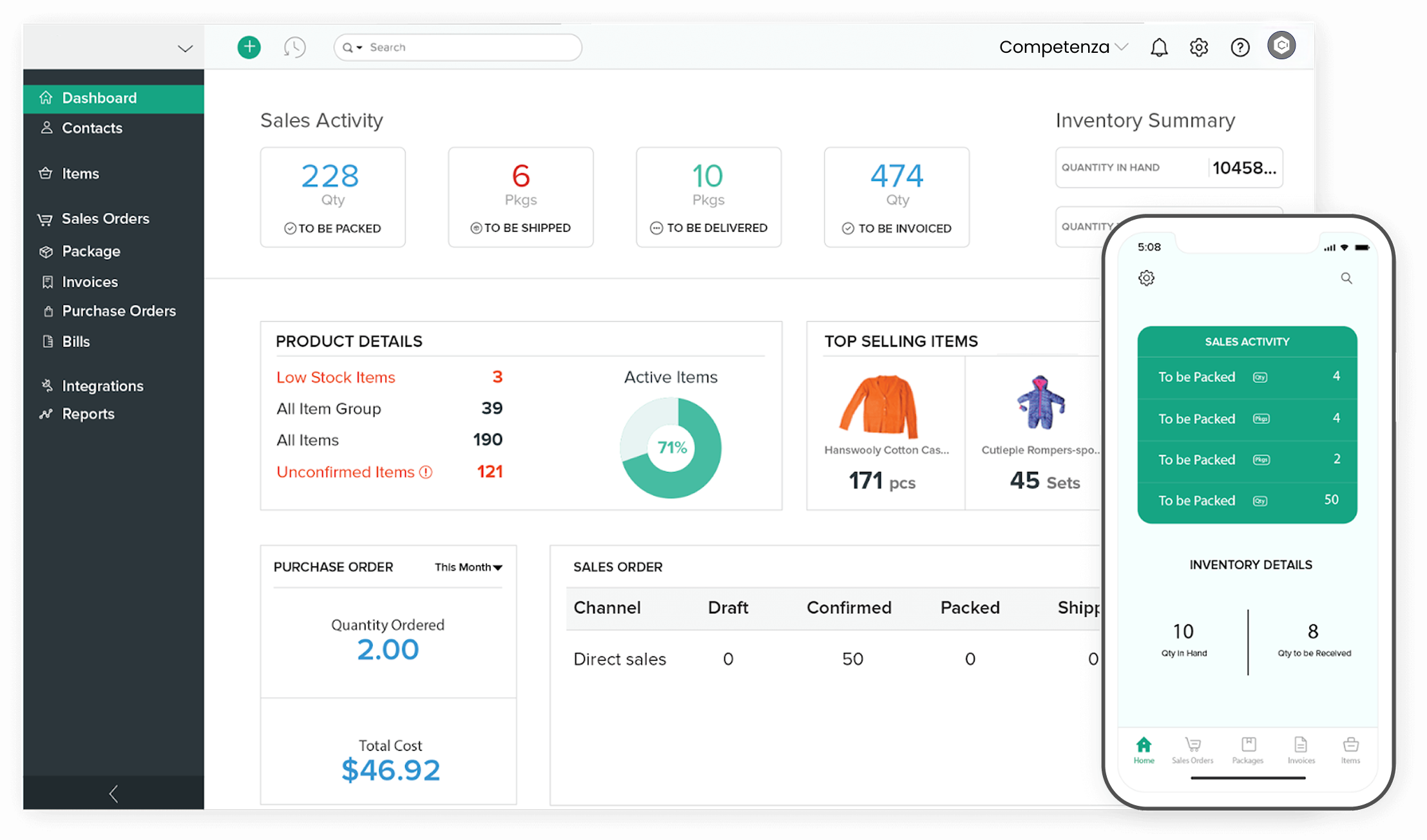
We replaced the daily batch reconciliation with a real-time inventory ledger, and built an automated returns workflow and a full-catalog AI recommendation engine on top of it, linked into one system rather than three standalone tools.
Built a real-time inventory ledger syncing stock across all 6 warehouses and 40+ boutiques within seconds of any sale, return, or transfer.
Integrated the platform with Saudi PDPL data handling, ZATCA-compliant e-invoicing, and mada payment compatibility from the first release.
Matched returned items back to their original order through the same scan, so refunds could be issued the moment an item was checked in.
Built an AI-driven recommendation and styling engine covering the full catalog, combining collaborative filtering on purchase history with attribute-based matching on size, fit, and color.
Built a demand-signal model that flagged SKUs trending toward a stockout, feeding that signal back into both the inventory ledger and the recommendation engine at the same time.
Automated returns intake, scanning each item against a condition check and routing it into resellable, markdown, or write-off tracks without manual sorting, while preserving a consistent, brand-appropriate handling standard.
Tech Stack Used
We used a modern, scalable web stack built on React and Node.js, with PostgreSQL for transactional data and AWS hosted in-region for Saudi data residency, chosen for reliability, security, and the ability to ship features fast without disrupting a live storefront. The recommendation and demand-signal models ran on a Python-based machine learning pipeline, retrained regularly against updated sales and inventory data, so the platform could scale with the catalog without a rebuild.

Project Results
Since going live, the connected backend has changed how the retailer handles inventory, returns, and product discovery across every channel, while keeping the boutique-level experience customers expect. The client has continued to track results through the first two quarters post-launch.
70%
Estimated reduction in overselling incidents on high-demand SKUs.
<24 hrs
Returns processing time, down from 5 to 7 days.
9 Days
Average lead time the demand-signal model now gives merchandising to reorder before a stockout.
18%
Estimated lift in average order value on sessions where the recommendation engine surfaced a suggested product.
Industry Insights Deloitte
2026 retail outlook found that 96% of global retail executives expect revenue growth this year, with adaptability and customer experience remaining central.
Success Stories We Are a Part Of


Related Services
Explore the delivery streams that made this project work. From core platform builds to web and mobile applications, we ship production-ready systems with clear APIs, strong QA, analytics, and predictable releases backed by SLAs and runbooks.

Custom Software Development
See how we build platforms like the inventory ledger and returns workflow behind this engagement.


Working on a similar backend transformation for a fashion or retail brand in Saudi Arabia?

CLIENT COMMENTS
“Before this, we found out about stockouts from customer complaints. Now we get a seven day head start. Competenza’s team stayed on it after launch too, not just handed it off and disappeared.”